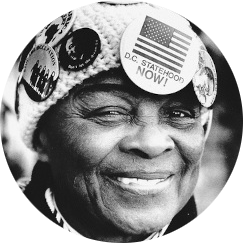
Commitment to Historical Accuracy
From the very beginning of this project, our team’s top priority was ensuring that the 51 Steps to Freedom: Josephine Butler Parks Center AR Stop would be historically accurate and worthy of Butler’s extraordinary life and work. Before creating any visuals or building any AR interactions, we spent a great deal of time gathering, reading, and cross-referencing materials from trusted archives, historians, and community organizations.
This page represents the foundation on which our entire project was built — a foundation of research, respect, and authenticity. Every element of our AR experience was developed to honor the legacy of Josephine Butler and to ensure that her story was told truthfully and with care.
Research Approach
Our process combined academic scholarship, public history, and community-based research. We drew from museum exhibitions, oral histories, news archives, and scholarly articles to accurately portray Butler’s decades of activism in Washington, D.C.
Josephine Butler’s leadership spanned housing rights, environmental justice, and D.C. statehood — all movements deeply connected to the lives of ordinary citizens. We found that, by far, the majority of the research materials revealed that her life was focused on her service to others rather than public recognition.
This research was not merely background information — it guided every design and storytelling choice we made. The tone, pacing, and imagery within the AR experience were all informed by the sources below.
Research & Sources
-
Kumfer, Timothy. “‘It’s in Our Hands to Build Our Country in Our Image’: Josephine Butler, D.C. Statehood, and the Everyday Work of Emancipation.” Washington History 36, no. 2 (Fall 2024): 46–59.
-
Butler, Josephine. “Education Position Paper.” 1976. Josephine Butler Papers, People’s Archive, DC Public Library.
-
Trail Blazer: The Josephine Butler Story. DCTV / Parks & People Foundation, 2019.
-
Butler, Josephine. Speech on D.C. Statehood. C-SPAN Video Library, July 5, 1990. Howard University, Washington, D.C.
-
Butler, Josephine. Earth Day Rally Speech. 1995 Earth Day 25th Anniversary Rally, Washington, D.C.
-
Hobson, Courtney C. “To Live and Breathe: Women and Environmental Justice in Washington, D.C.” The Public Historian 46 (1), 2024, pp. 166–171. University of California Press.
-
Geller, Joshua B. “Democratic Equality for Washington, D.C.” Perspectives on Politics, Cambridge University Press, 2025.
-
Smith, J. Y. “Josephine Butler Dies; Statehood Party Founder.” The Washington Post, March 29, 1997, p. B6.
-
Swift, Jamie A. “Josephine Butler and Environmental Activism in Washington, D.C.” Black Perspectives (AAIHS), January 13, 2018.
-
Comstock-Gay, Stu. “Interview with Josephine Butler.” The Washington Socialist, November–December 1984 (reprinted 2020).
-
“Josephine Butler: A Life of Service to the People of Washington, D.C.” The Washington Socialist, December 1997.
-
Women in History DowntownDC Callbox Tour. DC Preservation League, Washington, D.C.
-
DC Historic Marker: “Josephine Butler and the Integration of Adams Morgan.” Adams Morgan Heritage Trail, Cultural Tourism DC.
-
Interviews, articles, and community materials from the Josephine Butler Parks Center and Parks & People Foundation websites.
-
Archival imagery and public-domain materials related to Butler’s activism, used for reference in 3D and visual asset creation.
-
Local press coverage, museum texts, and oral-history materials providing social and political context for Butler’s work.
Closing Note
For our team, the research was a huge part of the creative act — the essential groundwork that allowed us to tell Josephine Butler’s story with honesty and depth. By centering our work on truth and service, we hope this AR experience honors the woman who spent her life doing exactly that.