This page offers a behind-the-scenes look at how our augmented reality project about Josephine Butler was created. From early research to user testing and final refinements, these milestones show the process our team followed to bring Butler’s story to life in an interactive format. We include this not only for academic transparency, but also to share how much care, creativity, and collaboration went into honoring her legacy.
Milestone 1: Project Proposal & Early Planning
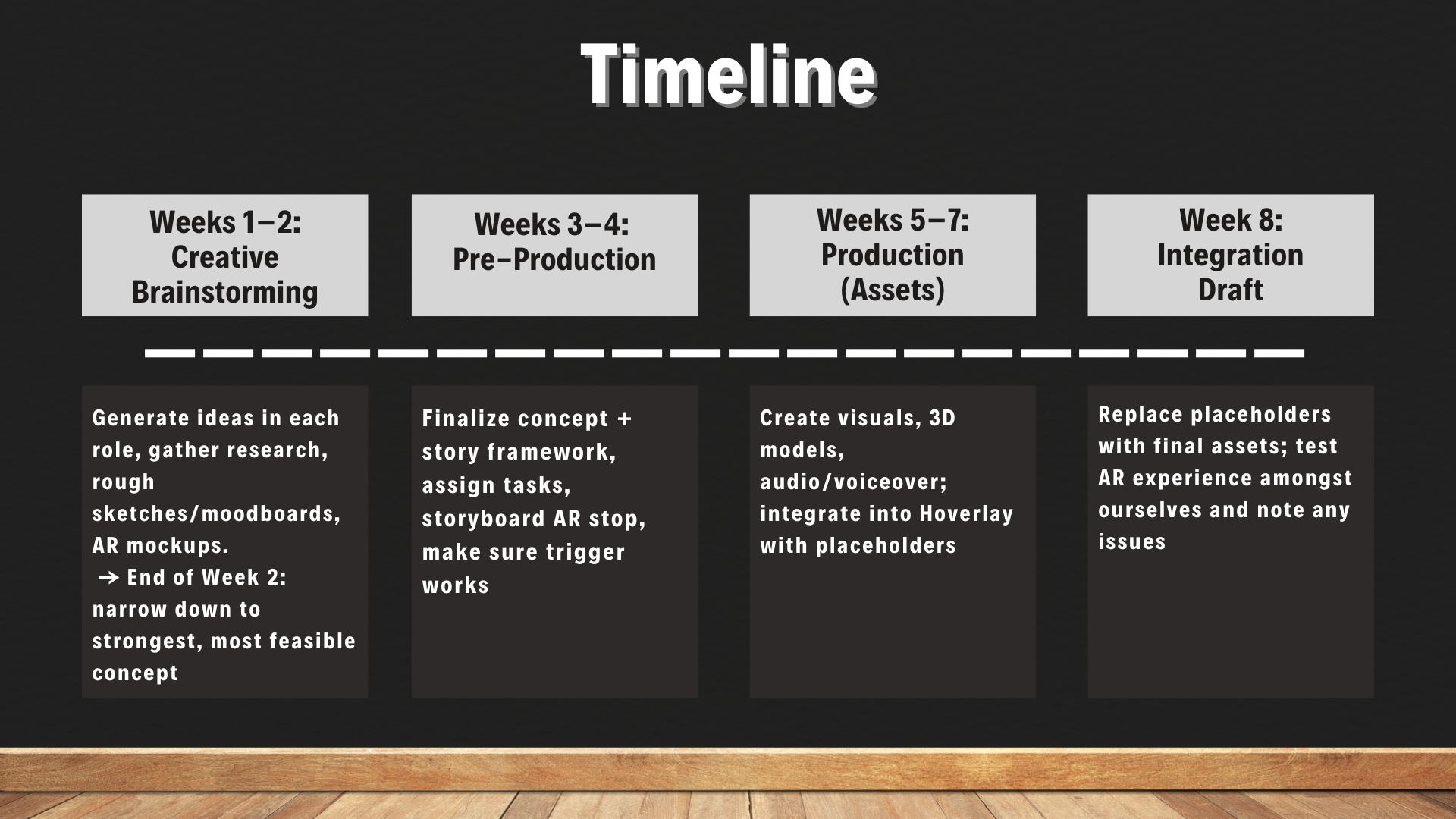
In the first weeks of the project, our team created a proposal outlining our goals, research focus, early design ideas, and production timeline. This included the first decisions about our roles, tools, and the overall structure of the AR experience.
Milestone 2: User Flow Development
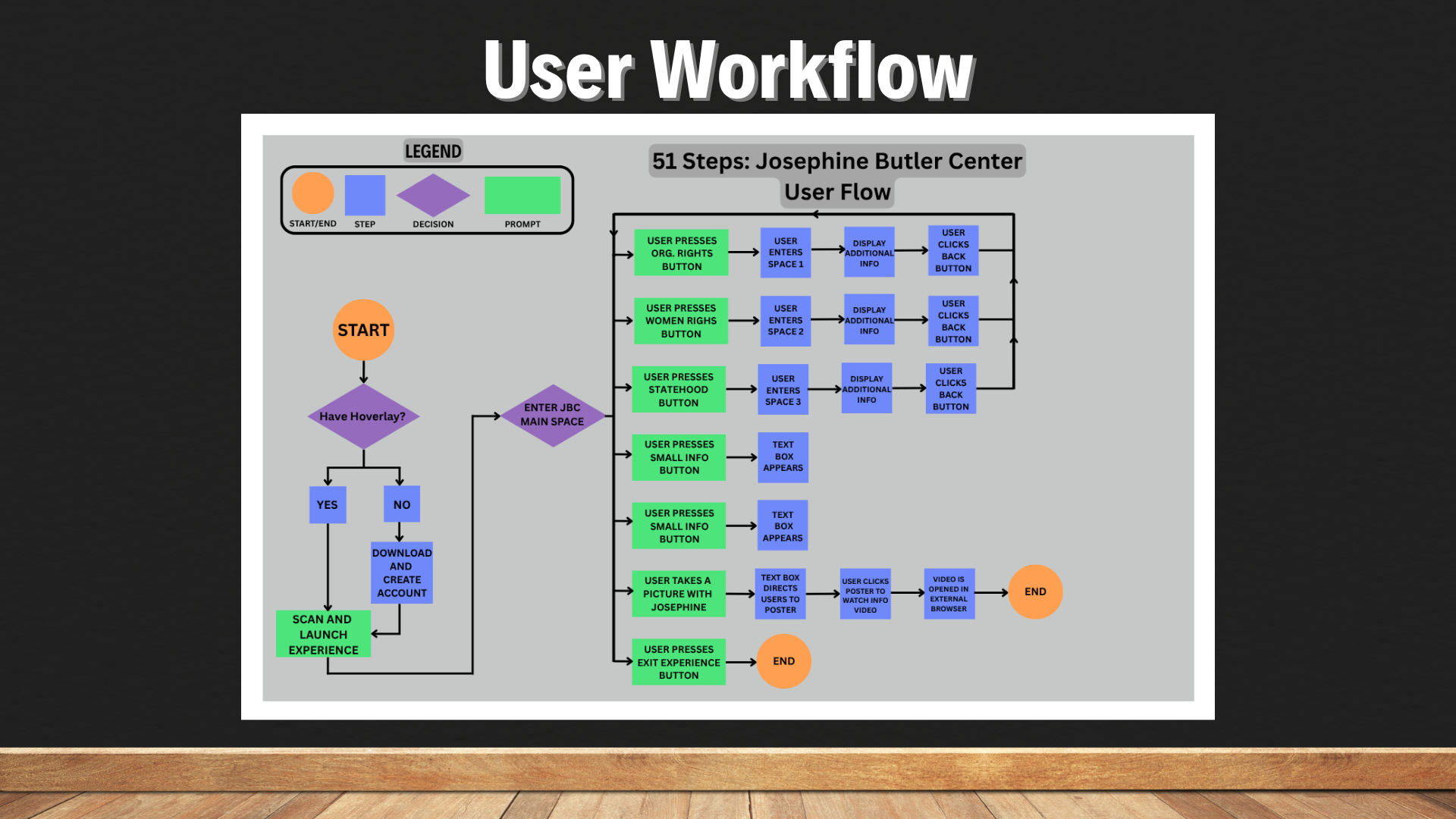
We created a complete user flow diagram showing how visitors would move through the AR experience. This mapped out the three core pathways—
-
Learn About Her History
-
Watch a Brief Video
-
Take a Photo With Her
—and helped us plan how each interaction would work once inside AR.
Milestone 3: Style Guide
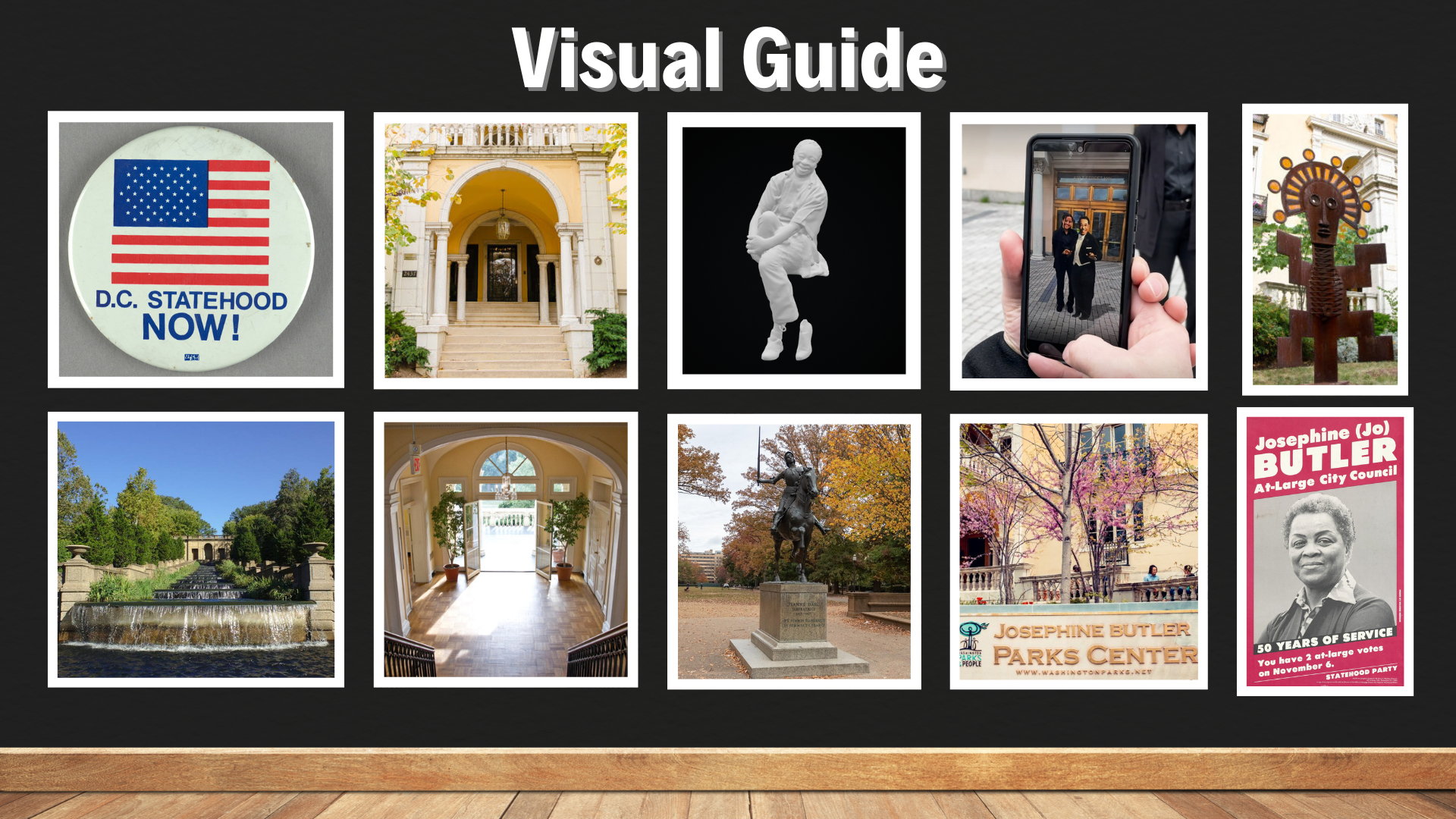
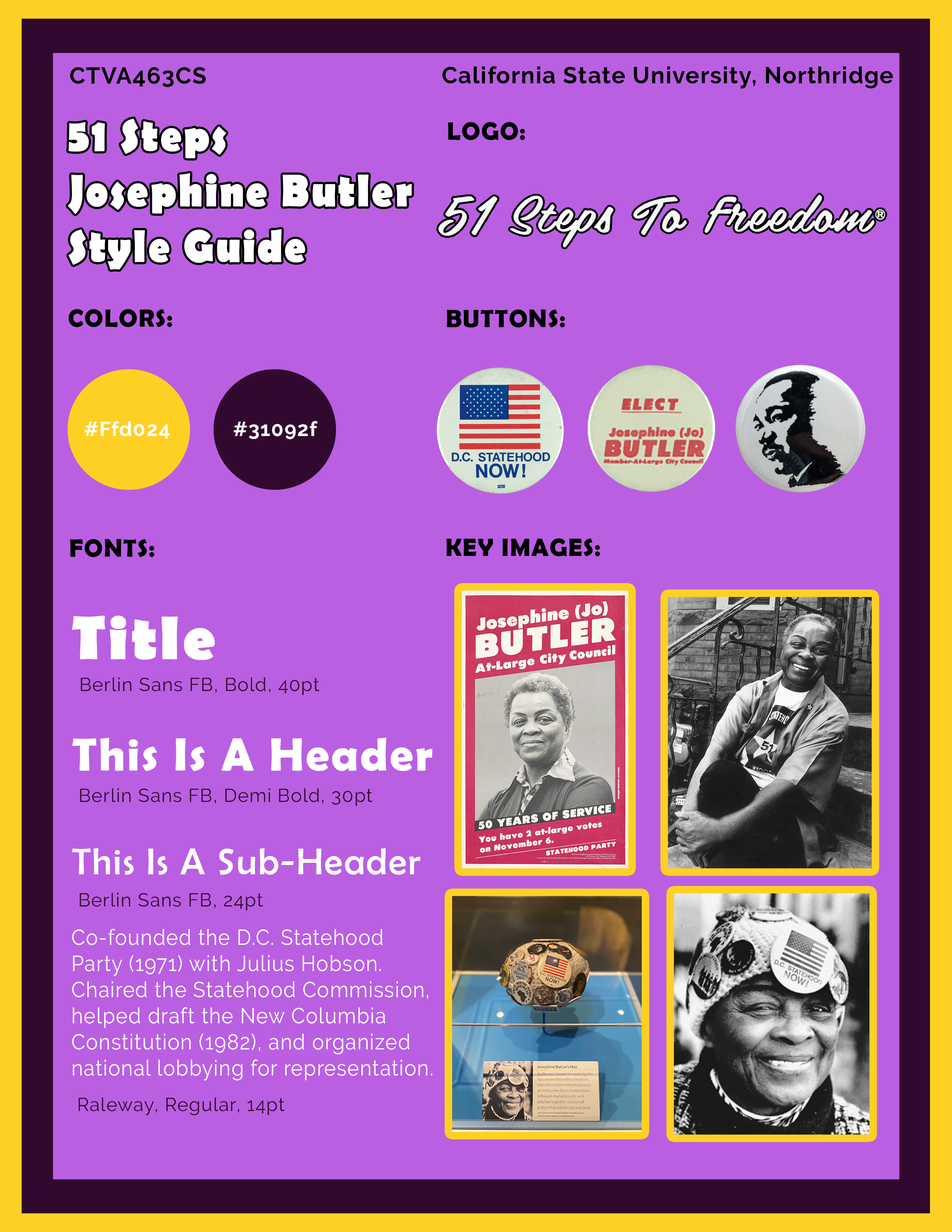
As part of our design process, we were given an initial style guide from the 51 Steps to Freedom Museum. While it provided a helpful starting point, our assignment required us to create a more comprehensive and unified visual system that would work cohesively between our work and the rest of the museum. We expanded and refined the visual language—color palette, typography, button styles, and imagery guidelines—so that it remained in harmony with the museum’s materials while better supporting clarity, accessibility, and historical tone. This early version of our updated style guide ensured consistency throughout the project and shaped the visual identity of the final experience.
Milestone 4: Mid-Term Progress
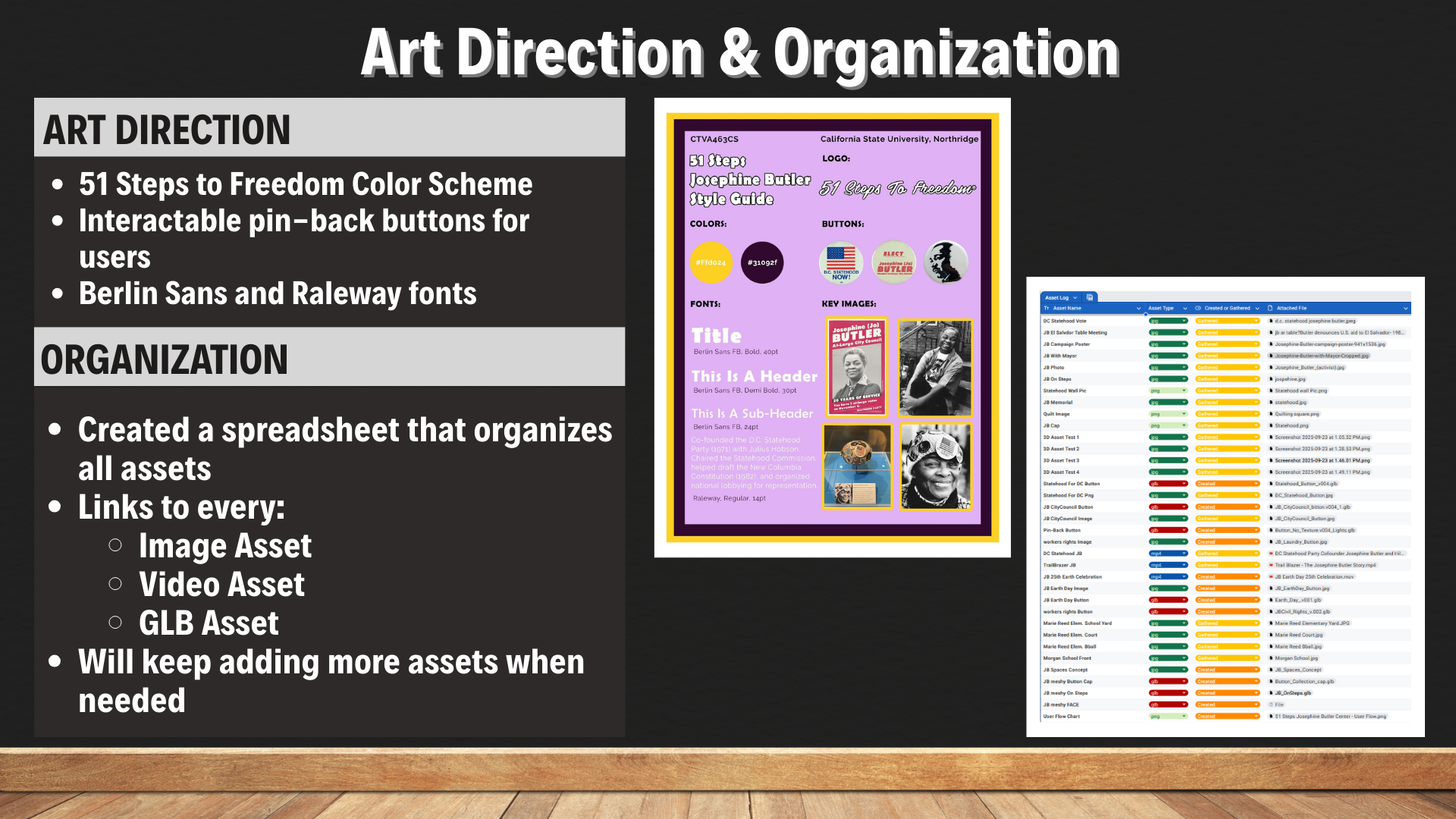
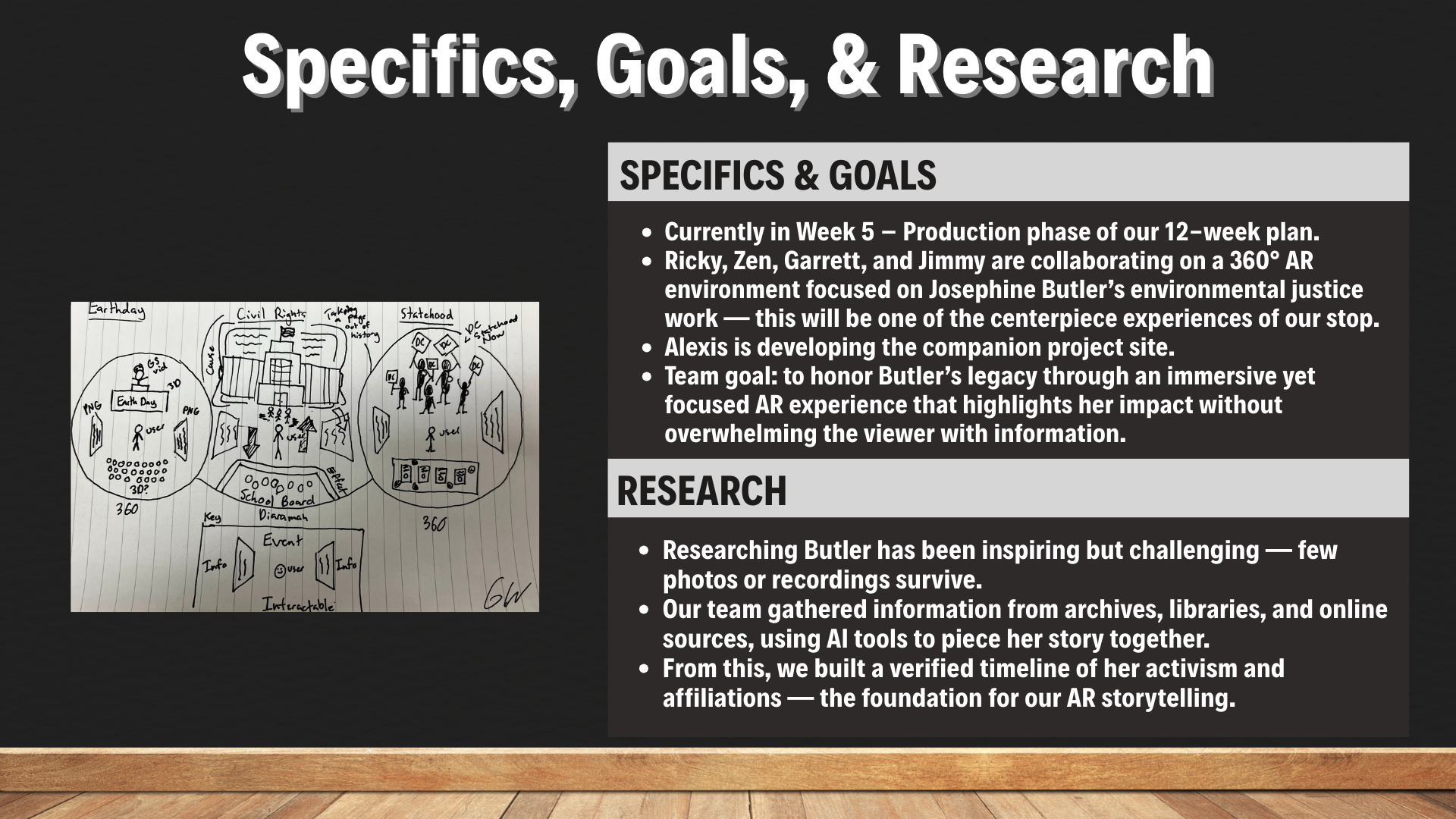
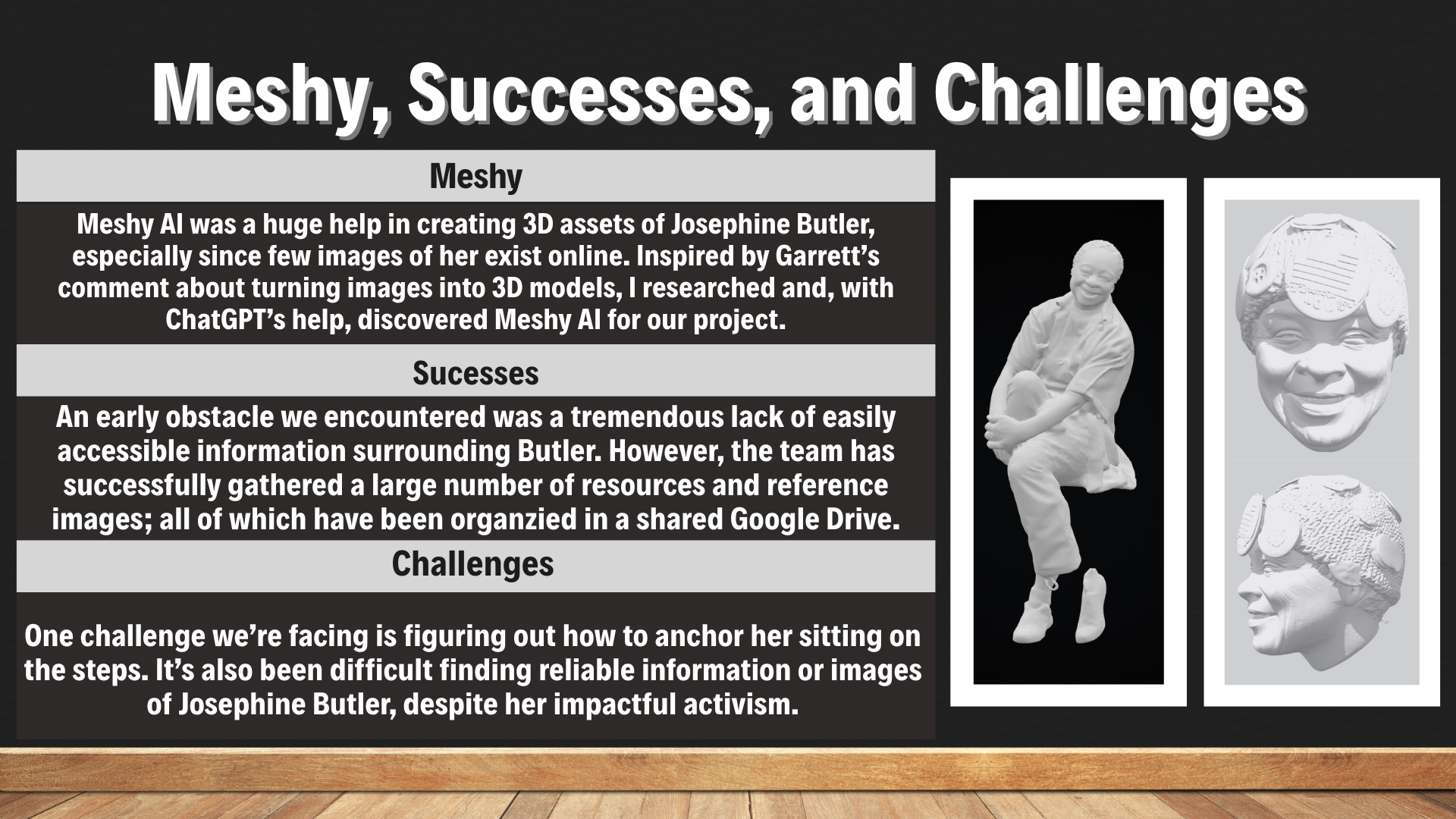
By mid-semester, we presented our early AR prototype, updated style guide, website progress, 3D assets, and research findings. This was the first time all project components—visuals, interactions, sound, and storytelling—came together.
Key midterm accomplishments included:
-
First AR test build with a working QR code
-
Initial 3D models (buttons, bust, building elements)
-
Early website pages
-
Draft of the interactive menu and structure
Milestone 5: User Testing & Improvements
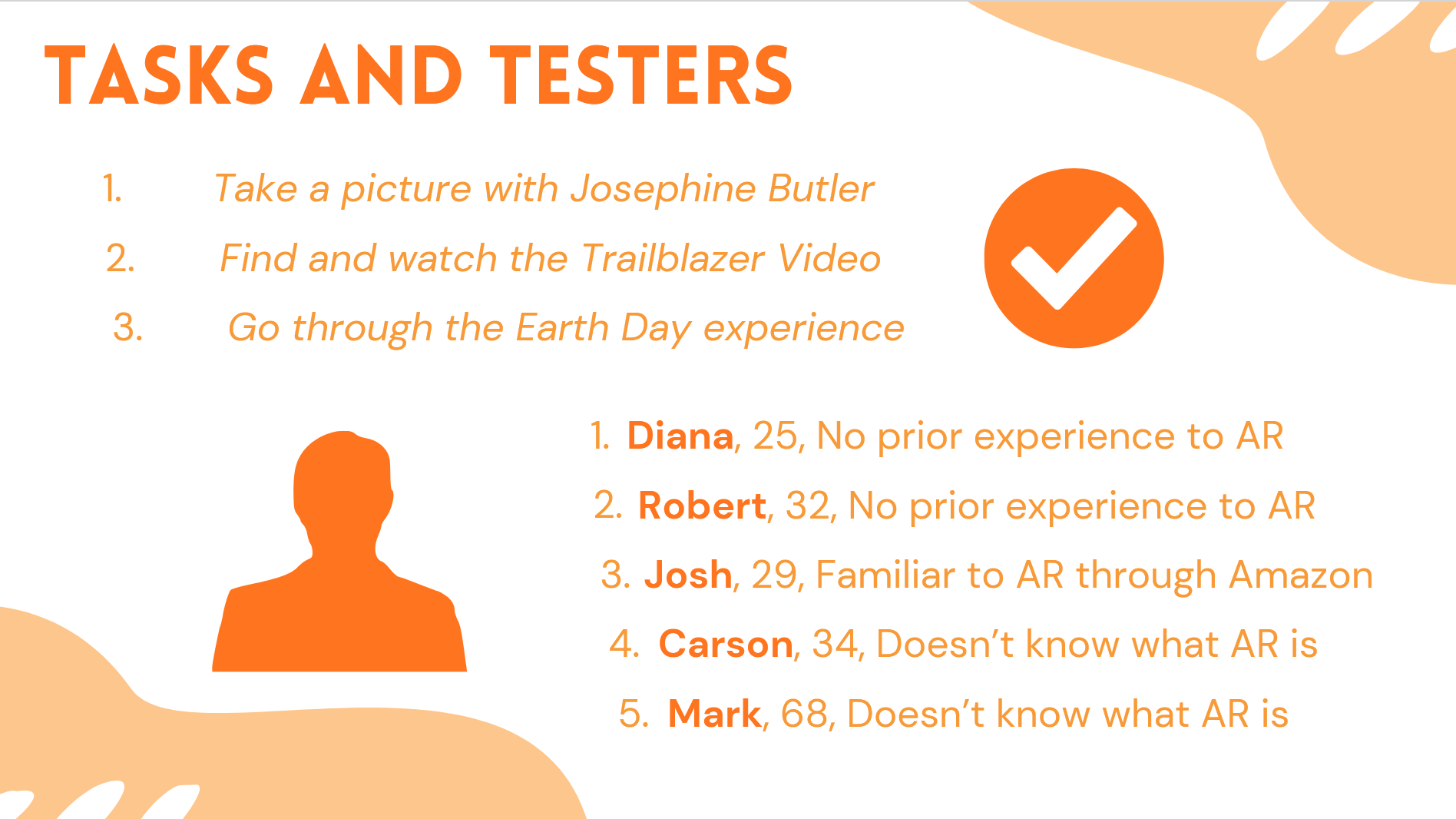
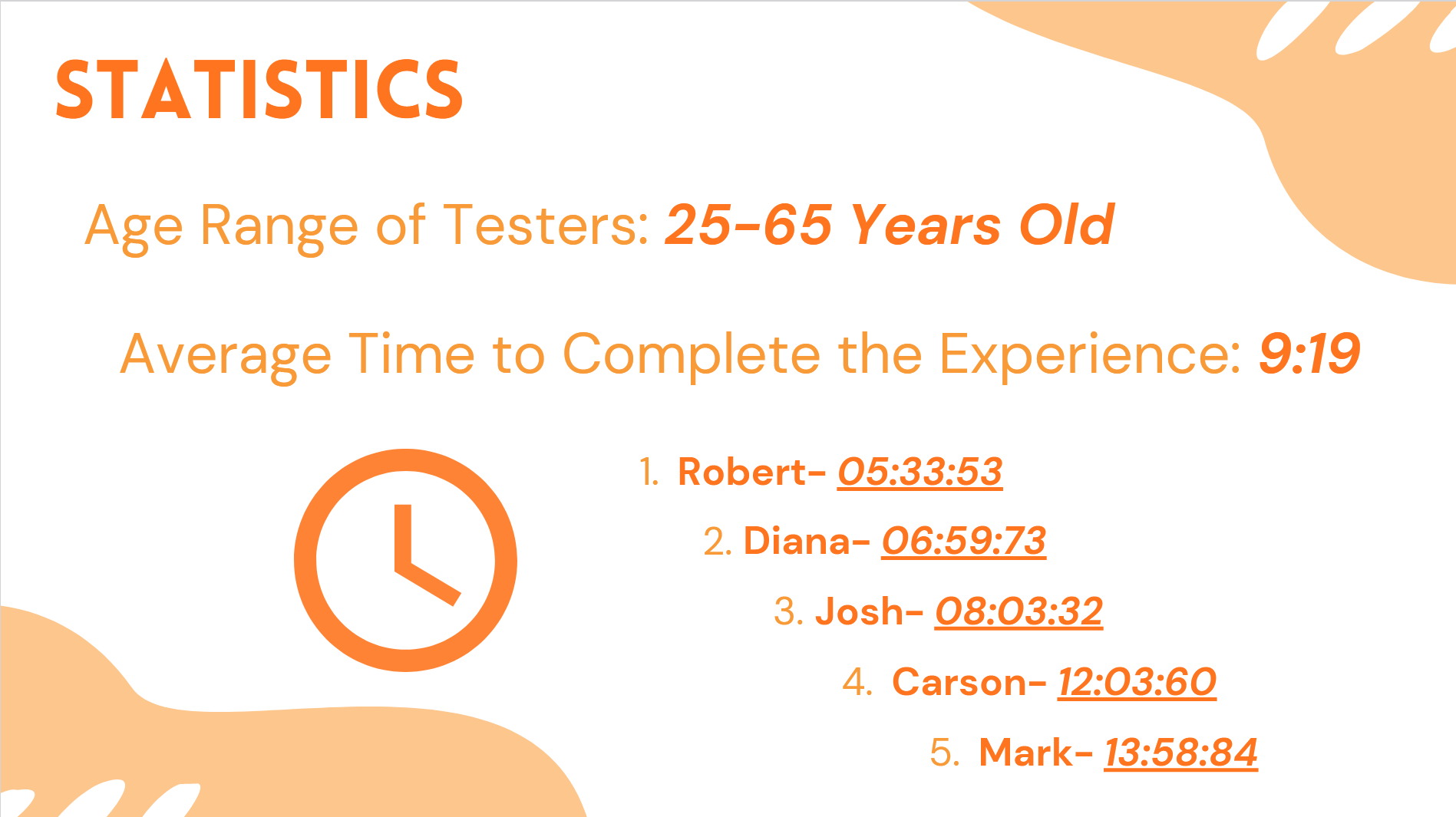
We conducted user testing with five participants ages 25–68, most of whom had never experienced AR. Each participant completed the same three tasks:
-
Take a picture with Josephine Butler
-
Watch the Trailblazer video
-
Go through the Earth Day experience
What users loved:
-
Feeling immersed in Butler’s history
-
Exploring 360° spaces
-
Seeing archival video in AR
-
The museum-like experience
What needed work:
-
Clearer instructions for navigation
-
More noticeable “return to menu” buttons
-
Guidance for taking the commemorative photo
-
Better readability for text boxes
-
Clearer indication that the hat buttons are interactive
Improvements we implemented:
-
Visual demos showing how to walk around the bust
-
Larger and shorter text panels
-
More prominent navigation buttons
-
Clearer onboarding instructions
-
Made interactive buttons easier to understand
REFLECTION
This project was built through ongoing research, prototyping, and community-minded design. Our goal was not only to meet academic requirements, but to create a digital experience that honors Josephine Butler’s work and provides visitors—whether they are in Washington, D.C. or anywhere else—with meaningful access to her story.
Our Process Page reflects that journey: from early sketches and ideas to a functioning AR installation grounded in history, empathy, and accessibility.